Trending

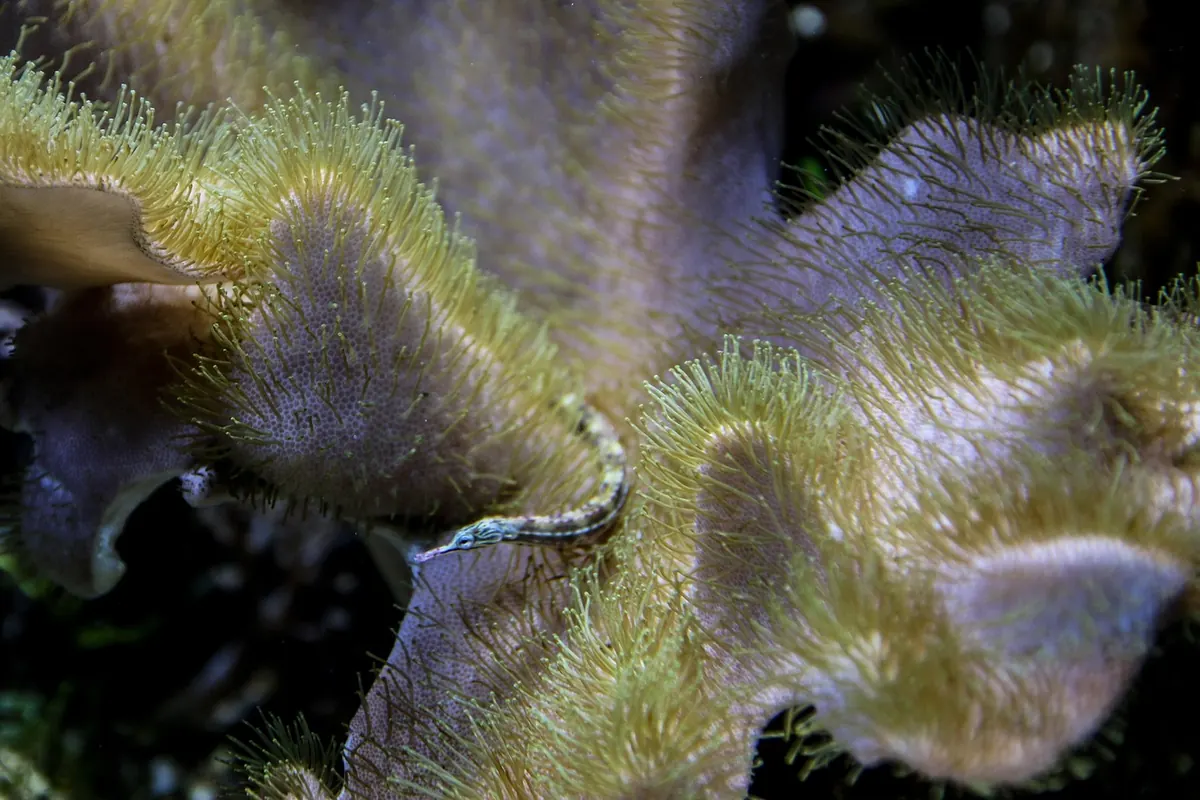
Put a torch coral next to an acropora and the difference is obvious within seconds. One is a cluster of fat, flowing tentacles; the other is a tight thicket of tiny bumps on a branching skeleton. Both are stony corals. Both build calcium carbonate skeletons and both come from the same shop — yet the two labels they carry shape almost every decision you will make about light, flow, food and placement.
Here is what LPS and SPS actually mean, where the line really sits, and how to work out which one belongs in your tank.
LPS stands for large polyp stony; SPS for small polyp stony. The names describe the polyps relative to the skeleton they sit in, not a family tree. Taxonomically the two groups overlap. Plenty of corals we call LPS sit in quite different families from one another, and a few hobby favourites — Turbinaria, Psammocora, some Montipora — get filed under one label by one shop and the other by the next.
What the split does capture is a set of practical tendencies. Large polyps usually mean a big mouth, a stronger reliance on catching food, slower growth and a little more tolerance of imperfect water. Small polyps usually mean a coral that leans hard on light, grows quickly and complains loudly when parameters drift. Those tendencies are what you are actually shopping for.
A polyp is the animal's mouth, gut and, in many cases, its main solar panel. An LPS coral might have a mouth 5–20 mm across, which is why a hammer coral or a Duncan will happily take a whole mysis shrimp, a krill or a sinking pellet. Feed one with a pipette and you will often see the tentacles curl inwards within a minute or two.
An SPS polyp's mouth is a fraction of that. Acropora and Montipora capture bacteria, fine particulates and phytoplankton, and they take the bulk of their energy from light. You can support them with a fine slurry of coral food or amino acids, but you are feeding the water column rather than the coral. If a shop sells you an SPS coral as "easy to feed", they mean it feeds itself.
LPS skeletons tend to be massive, meandering or plate-like — brain corals, favites, trachyphyllia. Growth is measured in millimetres per month, so a colony you buy stays roughly where you put it. Frags are cut with a band saw or a diamond blade, straight through the skeleton, and the exposed flesh needs clean water and time to heal over.
SPS corals branch, plate or encrust, and in a settled tank they can add centimetres a month. That cuts both ways: propagation is as simple as snapping a branch and gluing it to a plug, but a coral that grows fast can also shade its neighbours, touch a rival and strip overnight. Plan space for the coral it will become, not the frag you buy.
SPS corals generally want strong, consistent light — think of the upper half of the rockwork under a decent LED fixture, with rough targets somewhere in the 200–400 PAR range for the demanding acroporids. LPS corals are happier lower down, often 50–150 PAR, and will bleach or shrink if you park them directly under a bright cluster. Always acclimatise new corals low and raise them slowly over a few weeks.
SPS want brisk, random, turbulent flow that keeps detritus moving and delivers food. LPS want movement too, but gentler — enough to sway the tentacles, not enough to tear the fleshy tissue of a torch or frogspawn against the rock. A single tank can serve both if you place corals deliberately: high and open at the top, sheltered and lower down for the large-polyped species.
If an LPS coral's flesh is being pushed flat against its skeleton, the flow is too strong. Move the coral, not the pump — then adjust the pump next time you rescape.
LPS corals are the ones that repay target feeding. Two or three sessions a week with mysis, chopped prawn or a quality pellet will thicken tissue and speed growth, especially in tanks with few fish. SPS corals benefit from stable dissolved nutrients and light more than from heavy feeding; overfeeding an SPS tank usually shows up as algae, not growth.
Here is the real dividing line. SPS corals demand stability — alkalinity that does not swing, calcium and magnesium held in range, salinity and temperature steady. Occasional small variations are survivable; daily ones are not. Many LPS corals tolerate a wider margin, including slightly higher nitrate and phosphate, which makes them a kinder choice for a tank that is still settling down.
Mixed reefs work well, but they need planning. Aggressive LPS such as Galaxea, Euphyllia and Hydnophora extend sweeper tentacles at night that can reach several centimetres and sting anything within range. Leave generous gaps, run carbon to soak up chemical competition, and keep the fastest-growing SPS away from slow, expensive LPS colonies.
A quick way to compare the two before you buy:
If your tank is young, your test kit is basic or your schedule does not allow weekly testing, start with LPS and soft corals. They give you colour, movement and a forgiving margin while you learn how your system behaves. Then add hardy SPS once parameters hold steady for a couple of months. A sensible order looks like this:
If your lights are strong, your flow is chaotic, your dosing is consistent and you enjoy testing, go straight for SPS and build the tank around them. If you want a tank that looks full and forgiving, LPS will reward you for years. Most reefkeepers end up with both — and that is the best answer of all.
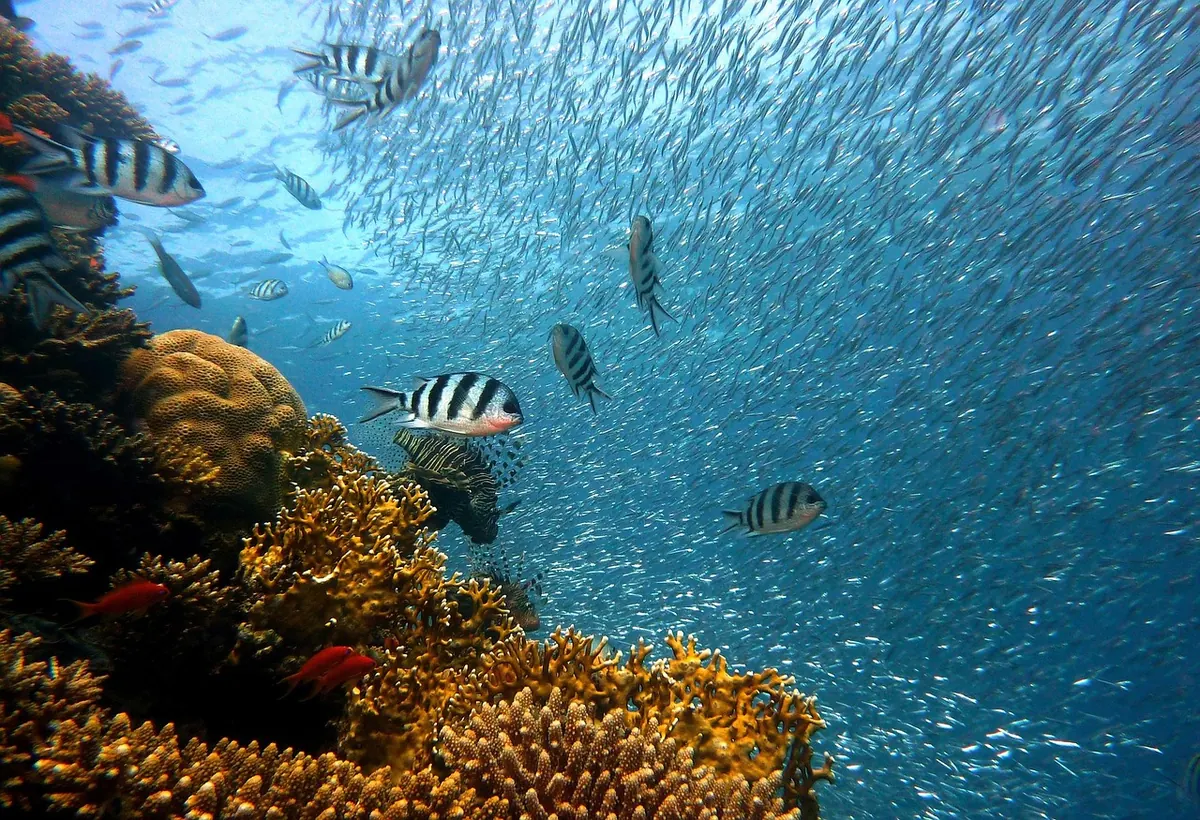
Photo: garten-gg / Pixabay