Trending

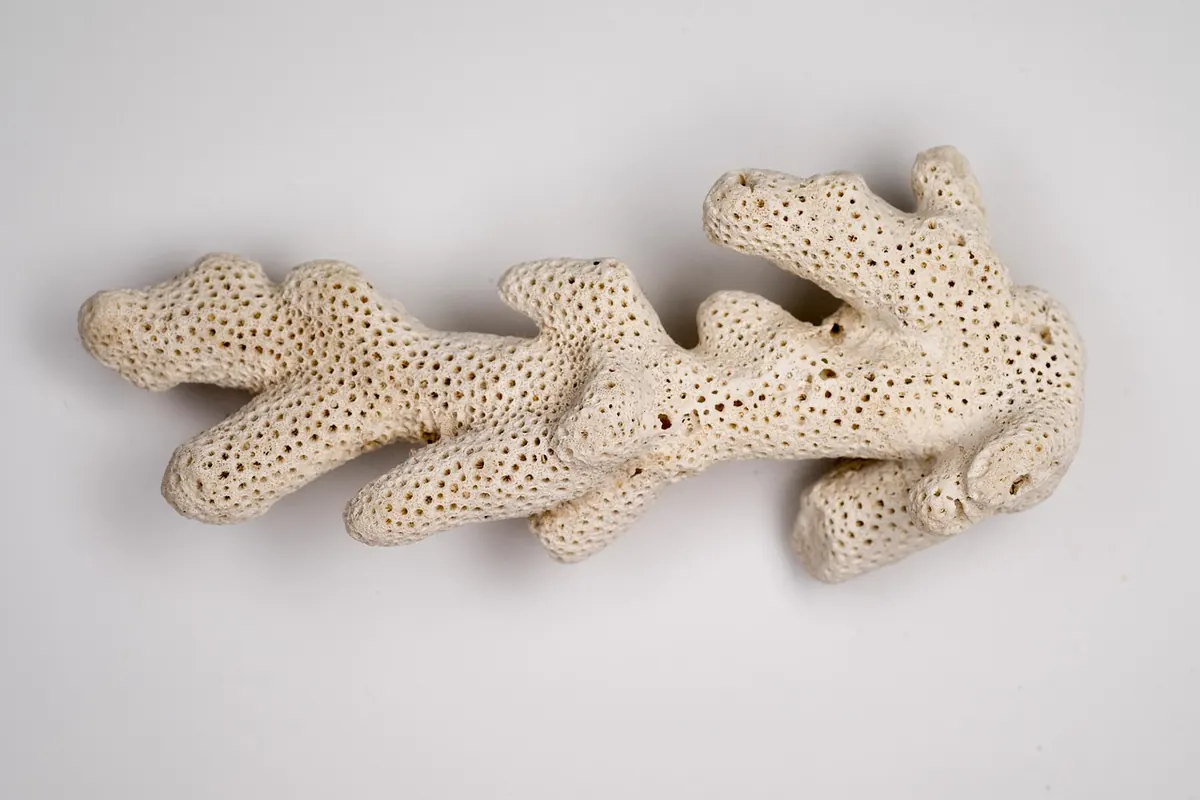
A bleached reef looks dramatic and eerily beautiful: whole branches turned bone-white under blue water. It is also widely misread. The colour in a healthy coral comes mostly from microscopic algae living inside its tissue, not from the coral animal itself. When that partnership breaks down, the coral does not die on the spot. It fades, turns glassy, and the white limestone skeleton beneath starts to show. Bleached corals can and do recover. Knowing how that works changes what you look for, both on a reef and in your own tank.
Corals are animals that host single-celled algae called zooxanthellae in their tissues. The algae get shelter and nutrients; in return they hand over sugars made through photosynthesis, which cover most of the coral's energy needs. Those algae are also what make many corals brown, gold or green. The coral's own tissue is largely clear.
Under stress, the coral expels its algae, or the algae lose their pigment. The tissue becomes see-through, so you are looking at skeleton, not dead coral. This is a stress response rather than a disease. If the stress eases quickly, the coral can take up new algae from the water or rebuild from the few left in its tissue. If it drags on, the coral slowly starves, and secondary problems such as disease usually finish the job.
Reef-building corals live close to their upper heat limit, so a sustained rise of only a degree or two above the usual summer maximum can be enough to tip them over. Duration matters as much as the peak. A short hot spell may cause paling; weeks of above-average warmth causes serious bleaching. Marine heatwaves that arrive before corals have fully recovered from the last one do the most damage.
Heat rarely acts alone. Bleaching tends to be worse where corals are already coping with other pressures:
These pressures stack. A reef stressed by runoff or overfishing may bleach at temperatures that a cleaner reef would shrug off.
Bleaching usually begins on the tips and upper surfaces, where light and heat hit hardest. Early on, the change is subtle: colours look washed out or pastel, and some corals briefly glow more brightly as they produce protective fluorescent pigments. Then come unmistakable patches of white, thinning tissue, closed polyps and a dull surface film. Algae colonise bleached patches quickly, which is why a reef can flip from white to greenish brown within weeks.
Recovery looks like the reverse, and it is worth knowing the sequence:
One caution: colour returning is not the same as full recovery. Corals that survive a bleaching event often grow more slowly, reproduce less and remain vulnerable to disease for months afterwards.
How long recovery takes depends on the species and the conditions. Fast-growing branching corals such as staghorn types can regain colour within weeks to a few months. Slow, massive species may take years, and some never fully rebuild the structure they lost. Recovery also needs a stable, cooler period, decent water quality and a nearby source of algae to repopulate from.
The bigger issue is frequency. Reefs need quiet years. When severe bleaching returns every few years, the balance shifts towards fast-colonising species and algae, and the reef's structure and diversity simplify. That is why reducing how often bleaching happens matters as much as reducing how bad any single event is.
You may be thousands of miles from the nearest reef, but the marine aquarium hobby is tied to reefs through livestock, knowledge, energy use and the example it sets. There is plenty you can do that is practical rather than symbolic.
Check your temperature probe against a reliable thermometer, then log tank temperature morning and evening for a fortnight so you know your real swing. Set your lighting to come on earlier in hot weather, and add a fan or chiller plan before you need it. Stabilise alkalinity and salinity rather than chasing perfect numbers. Next time you buy coral, choose a captive-bred frag. If you keep a reef, you are already a reef keeper. Treat that as a responsibility, and the hobby becomes part of the solution rather than another pressure on the world's reefs.
Photo: LeoNeoBoy / Pixabay