Trending

Ask a dozen reefkeepers what lights they run and you will get a dozen confident answers, often with a diagram drawn on a napkin. LED and T5 fluorescent lighting have been trading places at the top of the hobby for years, and both can grow corals beautifully. The real question is not which one is best in the abstract, but which suits your tank, your budget and the way you like to work. Here is how they compare on the things that actually matter: growth, colour, heat, running costs and day-to-day use.
T5 is fluorescent tube technology: linear lamps, usually 24W, 39W, 54W or 80W depending on length, sitting in a fixture with individual reflectors. Light arrives as a broad, even blanket across the tank. Most reefs run four to eight tubes, mixing colours such as blue plus, actinic, coral plus and purple plus to taste.
LED is a bank of diodes — royal blue, blue, white, violet, sometimes red and green — with lenses, drivers and a controller. It is a point source that spreads into cones, so you get shimmer, punch and shaded areas in equal measure. Intensity and spectrum are adjustable in ways a fluorescent tube simply cannot match.
Matched for intensity and spectrum, T5 and LED grow corals at similar rates. That is the boring answer, and it is the honest one. Where the two diverge is in how the light lands on a colony.
T5's even blanket reduces self-shading in dense SPS groups, which is a genuine advantage for thick acropora where lower branches get starved under a single LED source. LED allows very high intensity directly beneath the fixture, suiting frag racks and shallow tanks, and lets you push one area hard without frying another.
Either way, stalled growth usually comes from unstable alkalinity, temperature swings, weak flow or depleted nutrients long before it comes from the brand of light. Sort those out first.
Colour is where taste decides more than physics. T5 has a blended, gentle look, like a well-lit room, and you change the mood by swapping tubes — an actinic for fluorescence, a purple for warmth, a daylight tube for photography. LED gives you a dial instead, so you can run deep blue in the evening and a natural peak at midday, with ramps in between.
A few practical points:
Fluorescent tubes are less efficient, and energy that does not become light becomes heat, much of it in the canopy or the room above the tank. Inside a closed hood that means warmer water, more evaporation and, in a warm spell, a chiller working harder than you would like.
LEDs run cooler at the tank, but they are not heat-free: drivers and heatsinks warm the air, and big fixtures still add heat to a small room. Because they put less heat into the water, LED tanks often evaporate less — and in a cool house you may find you need a heater where you did not before. Neither option is a free lunch.
Do not judge on purchase price alone. A bank of six 54W tubes draws around 320W before ballast losses, and tube output fades long before the lamp stops glowing, which is why most reefkeepers replace tubes every 9–12 months. LEDs draw less power for the same output and have no consumable, but the upfront cost is higher and diodes lose a little output over many years.
Check your own electricity unit rate rather than relying on rules of thumb from forums, and add the figures up for three years, not one.
T5 is gloriously simple. Switch on, replace tubes, wipe the reflectors, done. No apps, no profiles, no firmware updates, no risk of leaving a channel at five per cent for a fortnight.
LED rewards anyone who enjoys tuning. You can ramp sunrise and sunset, run an acclimation schedule for new frags, dim for photographs and add a moonlight phase. The risk is over-adjusting; too many options invite constant change. Set intensity by measurement where you can — borrow a PAR meter if you do not own one — because lux meters and phone apps are not reliable for reef purposes.
Choose a light you will actually look after. A perfectly programmed LED that never gets cleaned delivers less usable light than a dusty T5 fixture that gets wiped down monthly.
Plenty of reefkeepers now run both. Two to four T5 tubes add fill light and cut shadowing, while LEDs supply punch, shimmer and the blue-heavy evening look. For a mixed reef with dense SPS, a hybrid is often the easiest route to even coverage without committing to one camp.
Work through this before you buy:
Whichever route you take, set intensity sensibly, keep your parameters steady and resist changing things every week. Corals respond to consistency far more than to brand names, and a well-run tank under either light will out-colour a neglected one every time.
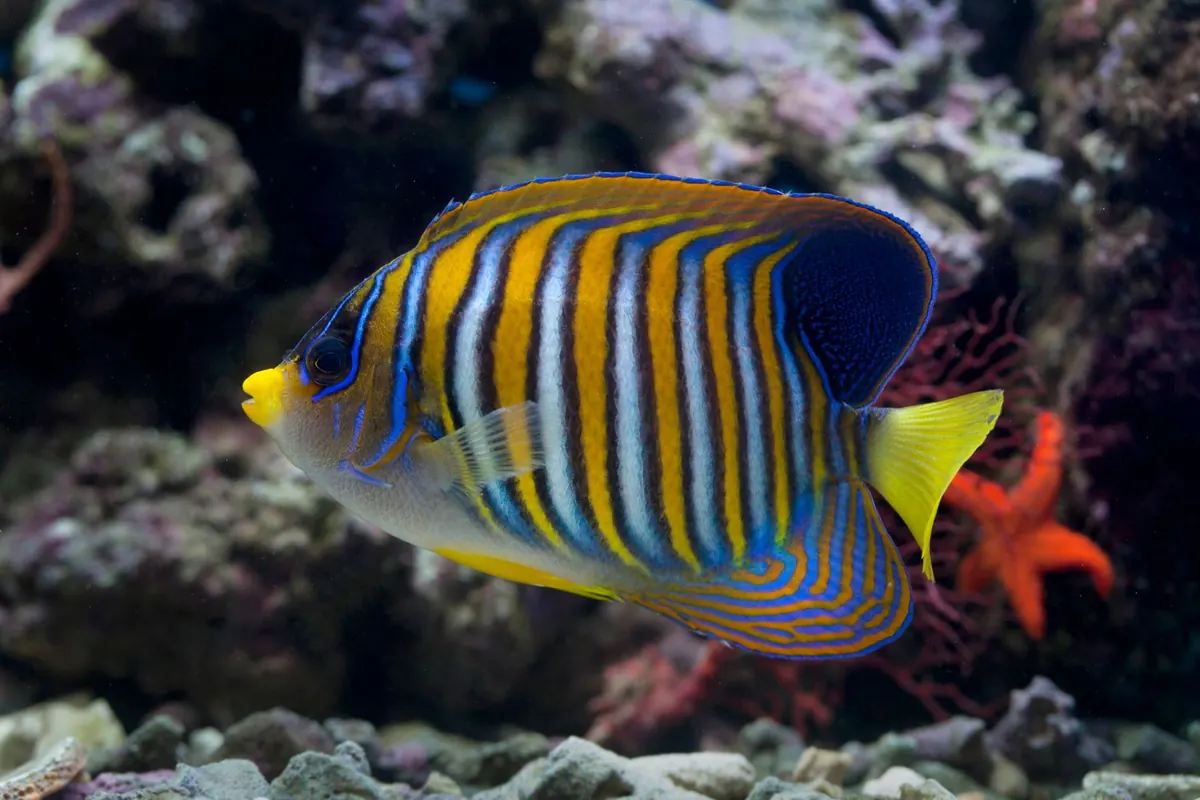
Photo: Jeffry Surianto / Pexels